INTRODUCTION
The signature wounds of modern military training and combat cannot be seen with today’s diagnostic tests. When Service Members and Veterans seek medical care for cognitive, psychological, or physical symptoms, the underlying cause of their impaired brain health is rarely identified. The wounds of war remain invisible. As a result, Service Members and Veterans may experience confusion, distrust of the medical establishment, and in the most tragic cases, despair that contributes to suicide.
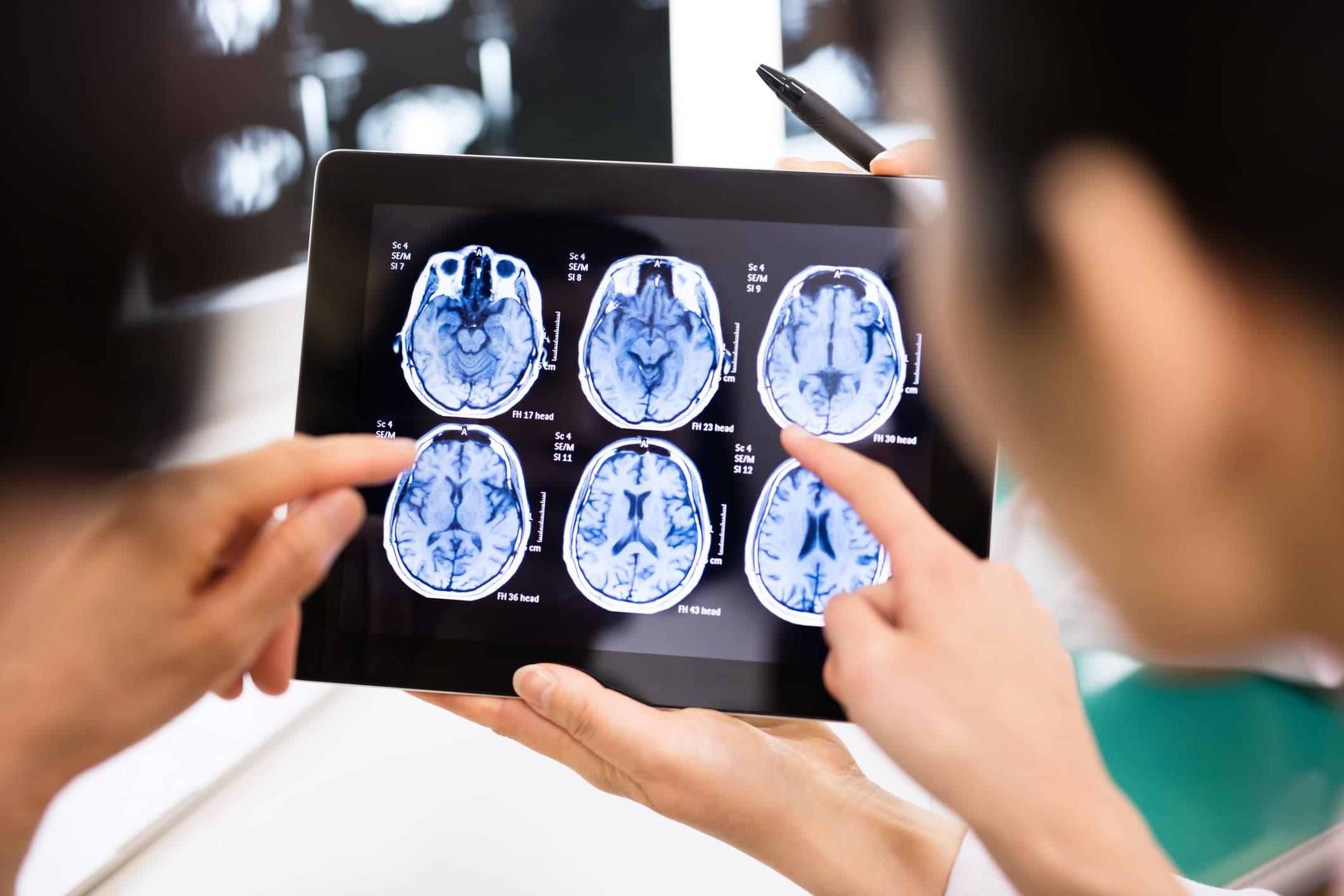
The primary reason that Service Members and Veterans with impaired brain health face diagnostic uncertainty is that the manifestations of repeated exposure to explosive blasts, blunt head impacts, acceleration/deceleration g-forces, and a multitude of additional exposures go unseen by head CT, brain MRI, and clinically available blood tests. Unlike a single blunt, blast, or penetrating traumatic brain injury (TBI), for which diagnostic criteria, neuroimaging biomarkers, and blood biomarkers are well established, no such diagnostic criteria or FDA-approved biomarkers exist for military personnel with symptoms that are believed to be attributable to repeated, subconcussive exposures. In a diagnostic vacuum, clinicians may provide a presumptive diagnosis of TBI, post-traumatic stress disorder (PTSD), or no diagnosis at all. The absence of observable lesions on clinically available brain scans often leads to ascriptions of altered “mental health,” a binary diagnostic approach that gained traction after World War I (i.e., TBI versus mental health disorder). Treatment is targeted to alleviating symptoms but does not address their underlying cause. This fundamental gap in knowledge and clinical care reverberates from Service Members and Veterans to their families, communities, and the broader public, with potential implications for recruitment and retention in the armed services.
As the military and medical communities grapple with a multidimensional diagnostic challenge, accumulating evidence from autopsy studies indicates that a broad spectrum of exposures during training and combat may be associated with injury to the brain—injury that may cause symptoms but is microscopic and undetectable by today’s diagnostic tests. For example, repeated blast exposure (RBE) has been associated with interface astroglial scarring (IAS), repeated blunt head impacts (RHI) and acceleration/deceleration g-forces with chronic traumatic encephalopathy (CTE), and burn pit inhalation with neuroinflammation. While several neuroimaging and blood-based biomarkers have shown promise for detecting IAS, CTE, and neuroinflammation, none currently has sufficient evidence to support its clinical implementation. Clinicians thus lack the tools to provide symptomatic Service Members and Veterans with optimal brain health care.
Since 2015, over $2 billion has been invested in military TBI research by federal and private sources, and philanthropic funding is approaching $80 million over the past decade. A series of recent Congressional initiatives are catalyzing progress, including the Warfighter Brain Health Initiative supported by the Defense Health Agency’s TBI Center of Excellence. In addition, the Fiscal Year 2025 National Defense Authorization Act directs the Department of War to implement measures minimizing Service Member exposure to blast overpressure, and the 2025 Blast Overpressure Safety Act proposed the creation of a Defense Intrepid Network of clinical centers to provide specialty care for blast-exposed military personnel. There is a growing focus on baseline cognitive assessments for military personnel, along with follow-up assessments at regular intervals to identify the impact of repeated occupational exposures on cognitive performance. Prevention and risk mitigation initiatives are being implemented to reduce blast overpressure exposure during training without compromising mission readiness. In parallel, a series of education, outreach, and engagement initiatives have been launched by the Department of War, Special Operations Command, and Veterans Affairs Administration to raise awareness about the potential effects of blast exposure on brain health, and to encourage symptomatic Service Members and Veterans to seek medical care. As awareness drives action, stakeholders in all echelons are accelerating efforts to prevent and treat brain injuries, even if we are not yet able to detect them.
Yet these collective efforts will not reach their full potential until the invisible wounds of war become visible. Only when the precise pathophysiological effects of RBE, RHI, acceleration/deceleration g-forces, and additional exposures experienced during military training and combat can be reliably detected in the human brain will we be able to rigorously evaluate prevention strategies and treatment protocols. Detection is the foundation upon which effective prevention and therapy will be built.
The development of diagnostic tests to visualize the invisible wounds of war is thus a topic of extraordinary importance to the military, medical, and scientific communities. Ongoing efforts to develop diagnostic tests are focusing on structural MRI, functional MRI, tau positron emission tomography (PET), translocator protein (TSPO) PET, and blood biomarkers such as tau, neurofilament-light, and glial fibrillary acidic protein. Whether a single diagnostic tool, or more likely, a multimodal diagnostic protocol, ultimately provides the greatest clinical utility remains to be determined, pending the results of ongoing and future studies. Central to these efforts is the validation of sensors and self-report questionnaires that measure exposures, as such validation is essential for elucidating the relative impact of each exposure on symptoms and biomarkers.
While the precise tactics, techniques, and procedures that will deliver success remain uncertain, the strategy for this no-failure mission is clear. There is broad consensus that we need to perform longitudinal studies with large sample sizes that track neuroimaging and blood biomarker changes while measuring dynamic exposures. Only with longitudinal studies that compare each individual to their own baseline, and each individual to large normative control databases, can an era of personalized, precision medicine truly take hold. Progress will also require enhanced synergy between government, medical, and scientific leaders who are tracking statistical associations between exposures, symptoms, and diagnostic biomarkers. Accordingly, there is a need for data-sharing policies that promote collaboration while maintaining the highest levels of data security.
For Service Members and Veterans with repeated exposures to blast overpressure, blunt head impacts, or acceleration/deceleration g-forces who are symptomatic and seek care today, clinicians should acknowledge with caution and humility that we currently lack reliable diagnostic tests. Though diagnostic uncertainty is suboptimal, in our view it is preferable to providing a potentially erroneous psychiatric diagnosis or asserting that there is no diagnosis at all. Providing a presumptive diagnosis of TBI may be appropriate for some individuals, given that TBI treatment pathways provide access to symptom-focused care, but clinicians should explain the fundamental pathophysiologic differences between a single TBI and repeated subconcussive events. Clinicians should also acknowledge that a normal brain imaging test, using today’s CT or MRI scans, does not mean that a Service Member’s or Veteran’s brain is free from injury. Microscopic injuries may exist below the detection threshold of conventional imaging, and individuals seeking care should be counseled as such. Compassionate counseling, and the validation of symptom burden as potentially attributable to an invisible brain injury, can save lives by preventing feelings of shame and despair that contribute to suicide.
It is equally important for clinicians to counsel Service Members and Veterans that symptom improvement is not only possible, but common after a broad spectrum of potentially injurious events. While the mechanistic basis of cognitive, psychological, and physical symptoms remains uncertain, there is growing evidence that an interdisciplinary, holistic approach to brain health care can lead to substantial symptom relief, or even resolution. The foundational principle of this therapeutic approach is personalized, symptom-targeted management, guided by comprehensive expert assessment, that leverages the brain’s potential for neuroplasticity via cognitive-behavioral therapy, physical and occupational therapy, speech-language therapy, vestibular rehabilitation, sleep optimization, and other therapeutic interventions. Pharmacologic therapy may be indicated for symptom relief, but caution is advised based on growing evidence that polypharmacy is associated with exacerbation of psychological distress.
CONCLUSION
The readiness and resilience of military Service Members is a non-negotiable national imperative. Our distinctive edge over near-peer adversaries and extremist threats rests on the autonomous ability of our warriors to adapt, overcome, innovate, and think critically under pressure, particularly for Special Operations Forces at the tip of the spear. Preserving warfighter brain health and cognitive performance is therefore as important for national security as it is for the career longevity and quality of life of the brave men and women who serve. The current lack of diagnostic tests that detect brain injuries associated with RBE, RHI, and acceleration/deceleration g-forces creates stress, anxiety, and doubt that can lead to shame and despair. We advocate for a cautious, humble approach to the diagnostic evaluation of Service Members and Veterans who experience cognitive, psychological, and physical symptoms—one that acknowledges the limits of current diagnostic tests. In parallel, we advocate for military, medical, and scientific leaders to strengthen their collective commitment to collaboration, data-sharing, and the development of new diagnostic tests. Making the invisible wounds of war visible is a strategic and moral imperative.
**
The full article, including complete references, is available in Military Medicine: https://academic.oup.com/milmed/advance-article/doi/10.1093/milmed/usag279/8726041